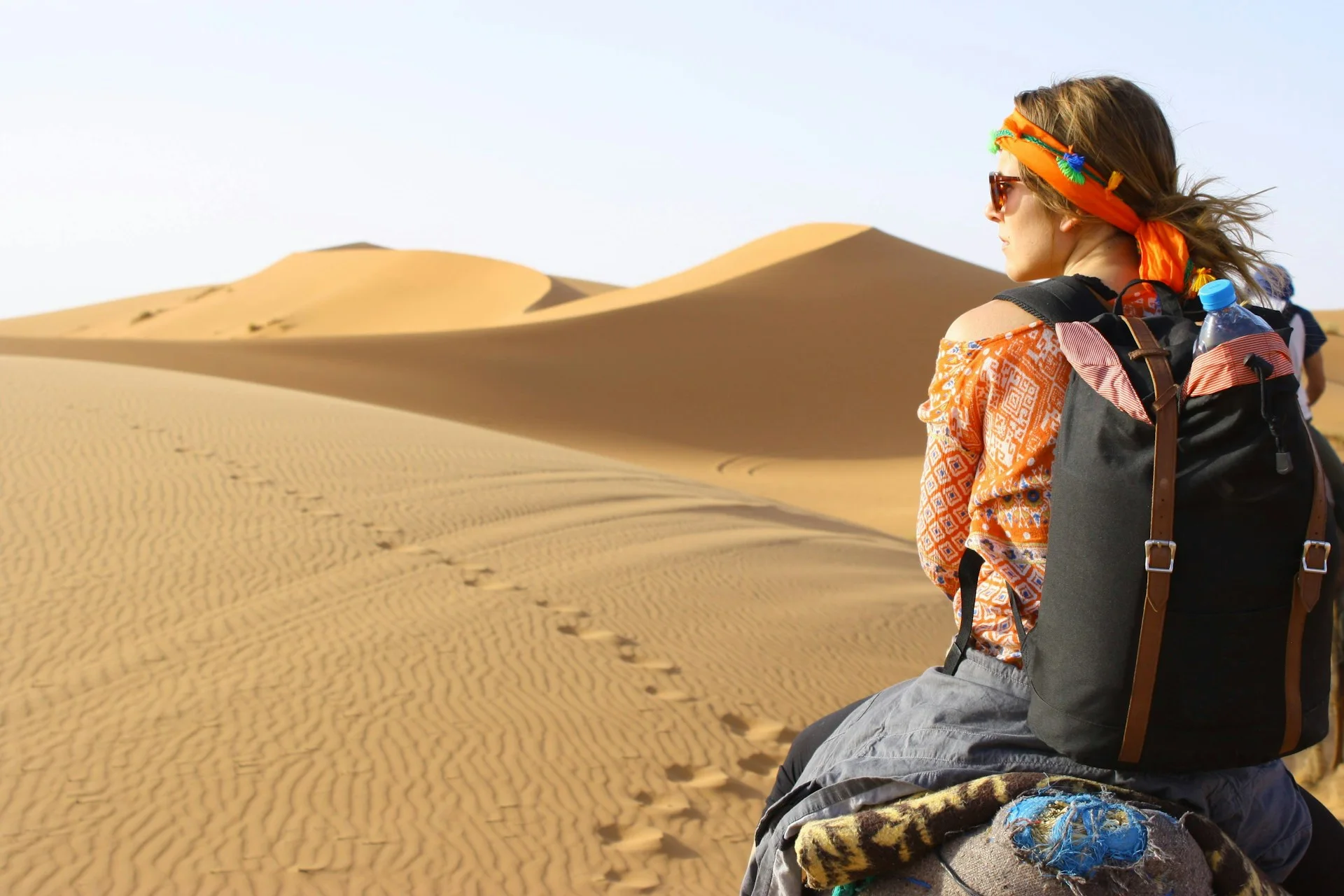
Packing for a Sahara Desert tour is different from packing for a few days in Marrakech or Fes. A desert journey can include long road transfers, mountain crossings, strong sunshine, sand, cool evenings and an overnight stay away from your main luggage.
The good news is that you do not need a huge amount of special equipment. For most travelers, the key is to pack light, use comfortable layers and protect yourself from the sun while keeping a few important items easily accessible.
What you need also depends on the season, your exact route and the facilities at your desert camp. A summer journey and a winter night in the Sahara should not be packed for in exactly the same way.
Quick Packing Checklist
1. Sahara Desert Packing Essentials
Prepare for the Desert
In This Guide
2. What Clothes Should You Pack for the Sahara?
Comfortable, lightweight clothing is usually more useful than heavy or complicated outfits. During warm conditions, loose breathable clothing can help you stay comfortable while also giving your skin some protection from direct sun.
Long trousers or lightweight travel pants are practical for road travel, walking around camp and camel excursions. A lightweight long-sleeved shirt is also useful because it provides additional coverage without requiring a heavy layer.
Pack clothes that you do not mind getting dusty. Desert travel is an outdoor experience, and fine sand can find its way onto shoes, trousers, bags and jackets.
3. Why Layers Matter in the Desert
One of the most useful packing strategies is layering. Conditions can change between daytime and evening, and a Morocco desert route may also cross the Atlas Mountains before reaching the Sahara.
Instead of relying on one very heavy item, pack a combination you can add or remove as conditions change: a comfortable base layer, a long-sleeved layer and a warmer jacket, fleece or sweater when the season requires it.
This becomes particularly important outside the hottest part of the year, when the difference between sunny daytime conditions and the evening can feel significant.
4. What Shoes Should You Wear?
Comfortable closed shoes are a dependable choice for most Sahara tours. You may walk over uneven ground, visit kasbahs and villages, stop at viewpoints and move around a desert camp after dark.
You do not normally need heavy mountaineering boots for a standard sightseeing desert tour, but shoes should have a secure fit and a sole that gives you reasonable grip.
Sandals or flip-flops can still be useful around accommodation, but they are better treated as a second pair rather than your only footwear.
5. Essential Sun Protection
Sun protection should be treated as an essential part of your desert packing list rather than an optional extra.
Useful sun-protection items:
- • Broad-spectrum sunscreen with SPF 30 or higher
- • Sunglasses with good UV protection
- • A hat or cap that shades your face
- • Lightweight clothing that covers exposed skin
- • Lip balm with sun protection if available
Remember that sun exposure does not disappear simply because the air feels cool. Protection still matters on breezy or cooler desert days.
6. Should You Bring a Scarf to the Sahara?
A lightweight scarf or wrap is one of the most versatile items you can bring. It can provide extra coverage from sun, wind and blowing dust, and it takes very little space in your bag.
You do not need to arrive knowing a special desert wrapping technique. If conditions become dusty, your guide can often show you a practical way to use a scarf around your head and neck.
Choose something breathable and comfortable rather than a very heavy winter scarf unless you are traveling during colder weather.
7. What to Pack for an Overnight Desert Camp
For one night at a desert camp, a small daypack or overnight bag is usually much easier to manage than taking everything from your main suitcase.
Keep the essentials together: a change of clothes, warmer layer, toiletries, medication, phone, camera, charging equipment and anything you need before bed or early the next morning.
A small flashlight or headlamp can be useful for moving around after dark, even at camps that provide lighting.
Camp facilities differ considerably. Before leaving, check what your particular camp provides, including towels, bedding, private or shared bathrooms, showers and electricity.
8. Toiletries and Personal Essentials
Keep toiletries simple and travel-sized where possible. Your basic kit might include a toothbrush, toothpaste, deodorant, moisturizer, lip balm, tissues and hand sanitizer.
Desert air and wind can feel drying, so moisturizer and lip balm are often more useful than travelers expect.
If you wear contact lenses, consider carrying your glasses as a backup because dust and dry conditions can make lenses uncomfortable for some people.
Bring any personal hygiene products you specifically depend on rather than assuming your camp will stock them.
9. Phones, Cameras and Power
The Sahara is highly photogenic, but sand and dust are not ideal for electronics. Keep your phone and camera protected when you are not using them.
A zippered case, camera bag or sealed protective pouch can reduce exposure to fine sand. Photographers using interchangeable-lens cameras should avoid changing lenses unnecessarily when sand is blowing.
Charge everything before the desert portion of your journey and carry a charged power bank. Some camps provide electricity, but charging arrangements differ and available outlets may be limited.
Download any tickets, booking details, maps or important contact information you may need so that you are not completely dependent on a mobile data connection.
10. Backpack or Suitcase for a Sahara Tour?
You do not necessarily need to replace your suitcase with a backpack for the entire Morocco trip. The more useful strategy is to have a small secondary bag for the desert night.
Your main luggage can often travel with the vehicle or be handled according to your tour's accommodation arrangements, while your smaller bag carries what you need at camp.
Because arrangements vary, ask your tour provider specifically what happens to large luggage during any camel ride and overnight camp transfer.
11. Medication and a Small First-Aid Kit
Bring enough of any regular medication you personally require and keep essential medicine accessible rather than buried in luggage that may travel separately.
A compact personal first-aid kit can also be useful. Depending on your needs, it might contain adhesive bandages, antiseptic, blister care and any familiar over-the-counter items you normally use while traveling.
Travelers with specific medical needs should prepare according to advice from an appropriate healthcare professional rather than relying on a general packing list.
12. What Changes by Season?
Spring & Autumn
These are popular periods for Sahara travel. Pack flexible layers so you can adapt between sunny daytime conditions and cooler evenings.
Summer
Prioritize lightweight breathable clothing, sun protection and hydration. Southern Morocco can experience intense heat.
Winter
Do not assume the desert is always hot. Bring genuinely warm layers for evenings, nights and early mornings.
Mountain Crossings
Marrakech-to-Sahara routes can cross the Atlas Mountains, so conditions along the journey may differ from those at the desert destination.
For a broader seasonal comparison, read our Best Time to Visit Morocco guide.
13. What to Carry on a Camel Ride
Keep what you carry during a camel excursion small and secure. A lightweight daypack is generally more practical than a loose shoulder bag or large suitcase.
Useful items include water, sunglasses, sunscreen, your scarf, phone or camera and a warmer layer if you are riding near sunset or during cooler weather.
Secure cameras, phones and other loose objects before the camel stands up or sits down. If you do not want to ride a camel, ask your tour provider what alternative transfer is available to your camp.
14. What Not to Pack for a Sahara Desert Tour
Overpacking can make a desert journey less convenient. Avoid bringing several outfits for a single camp night or carrying equipment you are unlikely to use.
Leave unnecessary items behind
- • Expensive jewelry or valuables you do not need on the trip
- • Too many changes of clothing for a one-night camp stay
- • Heavy footwear if your itinerary does not require it
- • Large amounts of electronics with no clear purpose
- • Anything fragile that is difficult to protect from dust
15. Final Check Before Leaving for the Sahara
Before leaving Marrakech, Fes or another starting city, check the forecast for the places on your route rather than looking only at the weather in your departure city.
Charge your phone and camera, refill your water bottle, move essential medication into your day bag and make sure you know what luggage will travel with you to camp.
Finally, confirm what your tour already provides. There is no benefit in carrying towels, bedding or other bulky items if they are already included at your accommodation.
Final Advice
Pack Light, but Prepare for Changing Conditions
A Sahara tour does not require an enormous amount of specialist gear. Comfortable layers, suitable shoes, strong sun protection and a small bag containing your overnight essentials will cover most travelers' needs.
The most important step is to pack for your actual season and itinerary. Morocco's landscapes and climate can change substantially between the city, Atlas Mountains and Sahara, even during the same journey.
Practical Questions Travelers Ask
Before You Zip Up Your Desert Bag
Can I take a large suitcase to a Sahara desert camp?
You can usually travel with normal luggage on the road portion of a desert tour, but taking a large suitcase all the way to a camp may be inconvenient or unnecessary. Camp access varies, so ask your tour provider whether your main luggage stays with the vehicle, at accommodation or travels to the camp. A small overnight bag is often easier for the items you actually need.
Can I charge my phone at a desert camp?
It depends on the camp. Some camps provide electricity and charging points, while others have limited power or may not provide charging inside every tent. Charge your devices before arriving and consider carrying a fully charged power bank rather than assuming electricity will always be available.
Where does my luggage stay during a camel ride?
Luggage arrangements depend on the specific tour and camp. Large bags may travel separately by vehicle or remain at another accommodation point while you take only a small bag on the camel excursion. Confirm the arrangement with your tour provider before departure, especially if you carry valuable or essential items.
Should I bring valuables to a desert camp?
Bring only valuables you genuinely need and keep important items such as your passport, money, phone and necessary medication secure and with you when practical. Avoid packing unnecessary expensive jewelry or equipment that you would be worried about losing or damaging during an outdoor trip.
Can desert sand damage my phone or camera?
Fine sand and dust can enter ports, buttons, lens mechanisms and bags. Keep electronics inside a protective case or sealed bag when you are not using them, avoid changing camera lenses in blowing sand when possible, and clean equipment carefully rather than forcing sand deeper into moving parts.
Continue Planning
More Morocco Desert Guides
Planning a Sahara Journey?
Explore Morocco Desert Tours
Compare private desert tours from Marrakech and Fes, including journeys to Merzouga, Zagora and the landscapes of southern Morocco.
Explore Morocco Tour Packages