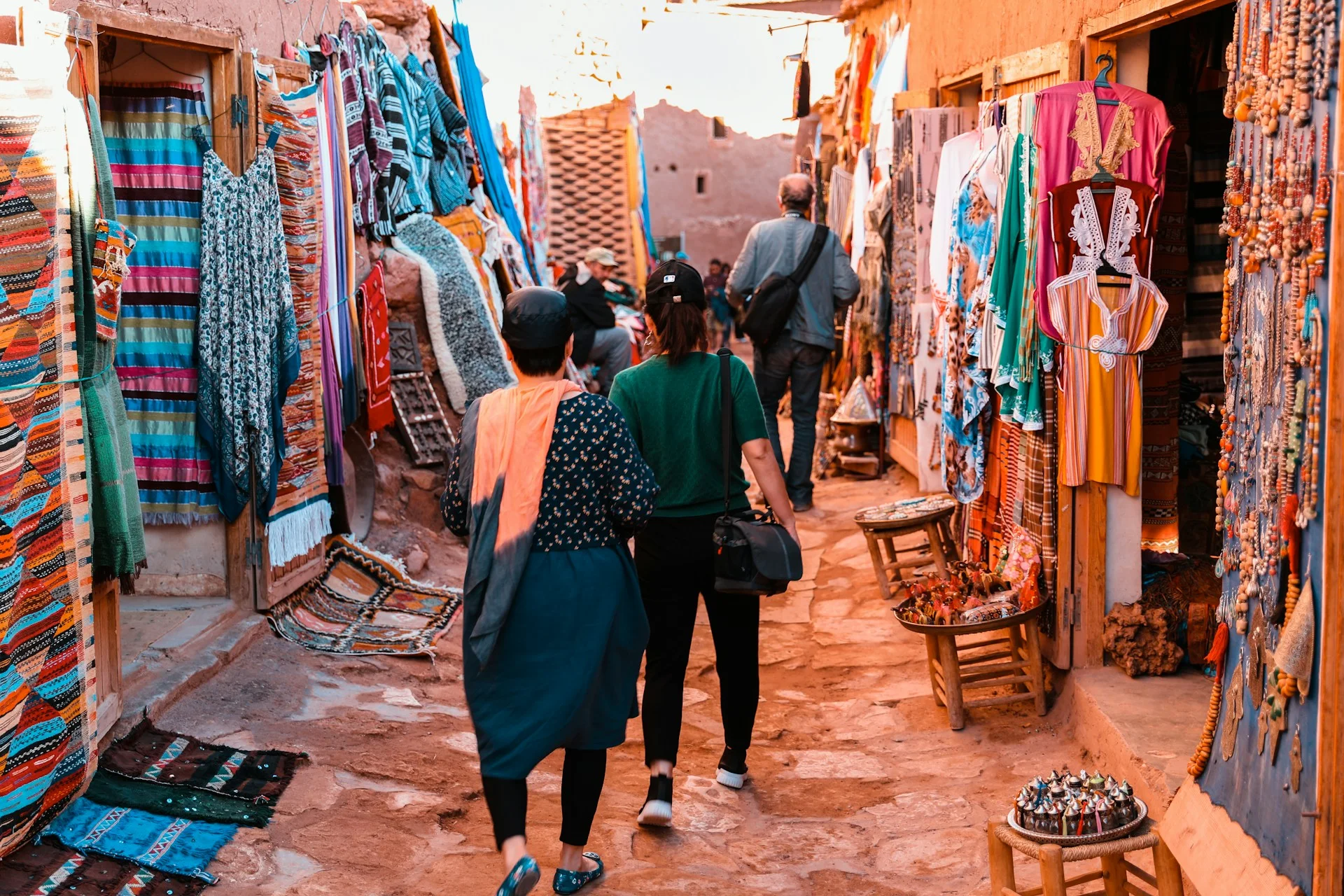
Morocco is a country of busy medinas, Atlantic beaches, mountain roads, historic cities, small villages and vast desert landscapes. That variety is one of the reasons it is such an interesting place to explore, but it also means that a little preparation can make your trip much easier.
If this is your first visit, you may be wondering how to pay for things, what to wear, how to travel between cities, what the weather will be like or what to expect in a traditional medina. This guide covers the most useful things to know before traveling to Morocco so you can arrive better prepared.
Morocco Travel Tips at a Glance
- Currency: Moroccan dirham (MAD).
- Cash: Keep some dirhams for small purchases, cafés, markets and places that do not accept cards.
- Languages: Arabic and Amazigh are official languages, while French is also widely used.
- Clothing: Comfortable, relatively modest clothing is a practical choice in many situations.
- Distances: Allow enough time when combining Marrakech, Fes and the Sahara.
- Desert travel: Merzouga is a long journey from Marrakech, not a quick excursion outside the city.
1. Check Morocco's Entry Requirements Before You Travel
Entry requirements for Morocco depend on your nationality and personal circumstances. Some travelers can visit without obtaining a visa in advance, while others may need a visa or another travel authorization.
Before booking your trip, check the latest requirements that apply to your passport. Make sure your travel documents are valid and keep copies of important documents separately from the originals.
Immigration rules can change, so official government or Moroccan consular information should always be your final reference before departure.
2. Morocco Is Bigger Than It Looks
One of the most common planning mistakes is trying to visit too many places in a short trip. Marrakech, Fes, Casablanca, Chefchaouen and the Sahara may all look close together on a map, but traveling between them can take many hours.
Journeys toward southeastern Morocco also cross the Atlas Mountains, where winding roads and scenic stops naturally add time to the trip.
A slower itinerary usually gives you more time to enjoy the places you visit instead of spending most of your holiday moving from one destination to another.
3. Money and the Moroccan Dirham
Morocco's official currency is the Moroccan dirham, usually written as MAD or DH. You will use dirhams for everyday expenses such as meals, drinks, taxis, shopping and entrance fees.
ATMs are available in major cities and many tourist destinations. Currency exchange offices can also be found in airports, cities and popular visitor areas.
It is useful to keep smaller notes and coins with you for small purchases and situations where paying with a large banknote may be inconvenient.
4. Cards Are Useful, but Carry Some Cash
Bank cards are accepted by many hotels and by some restaurants, shops and other businesses, especially in larger cities and tourist areas. However, you should not expect to use a card for every purchase.
Cash is particularly useful in traditional markets, smaller cafés, local shops and rural areas. A combination of a bank card and some Moroccan dirhams is usually more practical than relying completely on one payment method.
5. What to Wear in Morocco
Morocco has modern cities, traditional communities, beach destinations, mountain villages and desert regions, so what feels appropriate can vary depending on where you are.
Comfortable and relatively modest clothing is a practical choice for most travelers. Lightweight trousers, longer skirts or dresses, T-shirts and shirts that cover the shoulders work well in many situations.
Bring comfortable walking shoes for medinas and sightseeing. If you are traveling to the mountains or desert, layers are useful because temperatures can change considerably between daytime and night.
6. Languages Spoken in Morocco
Arabic and Amazigh are Morocco's official languages. Moroccan Arabic, often called Darija, is widely spoken in daily life. French is also commonly used, particularly in business, tourism and many urban areas.
English is increasingly used in tourism, especially in popular destinations. You can travel without speaking Arabic, but learning a few simple local expressions can make everyday interactions more enjoyable.
7. Getting Around Morocco
Morocco offers several ways to travel, including trains, coaches, taxis, domestic flights, rental cars and private transportation. The best option depends on your route and how much flexibility you want.
Trains are useful between several major cities. Coaches connect many destinations that are not on the rail network. Taxis are widely used for local and regional journeys.
For routes through the Atlas Mountains and toward the Sahara, private transportation or an organized multi-day tour can make the journey easier because sightseeing stops can be included along the way.
8. Morocco's Medinas Can Be Confusing — and That Is Part of the Experience
Historic medinas are among the most memorable places to explore in Morocco. Their narrow streets can contain markets, workshops, riads, bakeries, cafés and historic buildings within a compact area.
They can also be difficult to navigate when you first arrive. Some lanes are not accessible by car and online maps may not always make every small passage obvious.
Save the location of your accommodation, carry its address and allow extra time when walking through an unfamiliar medina.
9. Understand Moroccan Souks and Bargaining
Visiting a souk is part of the experience for many travelers. You may find carpets, leather goods, lamps, ceramics, spices, clothing, jewelry and locally made crafts.
In many traditional market situations, prices can be negotiated. Keep the conversation friendly and only bargain seriously for something you are genuinely interested in buying.
You do not need to rush. Look around, compare items and decide what something is worth to you before agreeing on a price.
10. Respect Local Customs and Religion
Morocco is a Muslim-majority country with a mixture of modern lifestyles and long-standing traditions. Customs can vary between large cities, small towns and rural communities.
Being polite, dressing appropriately for the setting and showing respect around religious places will help you travel more comfortably.
Not every religious site is open to non-Muslim visitors, so check the rules before entering rather than assuming access is permitted.
11. Ask Before Photographing People
Morocco is extremely photogenic, but remember that the people around you are not simply part of the scenery.
If a person will be clearly recognizable in your photograph, asking permission first is respectful. If someone does not want to be photographed, accept their decision.
Be particularly thoughtful in markets, villages, residential neighborhoods and around religious locations.
12. Enjoy Moroccan Food and Be Sensible About Drinking Water
Food is an important part of traveling through Morocco. Depending on where you visit, you may encounter tagines, couscous, grilled meats, salads, soups, pastries, bread and many regional dishes.
Choose places that appear clean and busy, particularly when trying street food. Travelers with sensitive stomachs may prefer bottled or appropriately filtered water and should use the same judgment they would when visiting any unfamiliar destination.
If you have food allergies or dietary restrictions, learning how to explain them clearly before your trip can be useful.
13. Internet and SIM Cards Make Staying Connected Easy
Wi-Fi is common in hotels, riads and many cafés. Travelers who want mobile internet throughout their trip can also consider a local SIM or another mobile data option compatible with their phone.
Having mobile data is useful for maps, contacting accommodation, checking reservations and communicating while traveling between destinations.
Downloading important information and offline maps before long road journeys is still sensible, particularly when traveling through remote mountain or desert areas.
14. Morocco's Weather Changes Dramatically by Region
There is no single Morocco weather forecast that describes the whole country. Conditions can be very different on the Atlantic coast, in Marrakech, in the Atlas Mountains and near the Sahara.
Summers can be extremely hot in some inland and desert areas, while winter nights can be surprisingly cold in the mountains and desert. Packing layers gives you more flexibility.
Check the forecast for the specific destinations on your route, not just the city where your trip begins.
15. Know What to Expect When Visiting the Sahara
A Sahara trip is one of the experiences many visitors look forward to most, but it is important to understand the geography before planning your route.
Merzouga, near the Erg Chebbi dunes, is far from Marrakech. The road journey normally forms part of the experience, passing through the Atlas Mountains and southeastern Morocco.
Zagora and Agafay offer different landscapes and travel times, so they should not be treated as identical alternatives to Merzouga.
Bring sun protection, comfortable clothing and layers for changing temperatures. A small overnight bag can also be useful when staying in a desert camp.
16. Don't Try to See Too Much in Too Few Days
Morocco rewards travelers who leave enough time for the journey. Trying to combine Marrakech, Fes, Chefchaouen, Casablanca and the Sahara in only a few days can create an exhausting itinerary.
Decide which experiences matter most to you and build your route around them. With more time, you can add additional cities and regions without turning every day into a long transfer.
If you have a week, ten days or two weeks, the ideal itinerary will be different. Planning around realistic driving and travel times is more important than simply adding as many destinations as possible.
17. Traveling in Morocco During Ramadan
Ramadan is an important month in Morocco. Many Muslims fast between dawn and sunset, and the rhythm of daily life can change during this period.
Some businesses and attractions may adjust their opening hours, while evenings can become particularly lively after the fast is broken.
Tourists can still travel during Ramadan, but patience and respect are important. Be considerate when eating, drinking or smoking around people who are fasting, particularly in public settings.
18. Use Normal Travel Awareness and Prepare for Common Tourist Situations
As in other popular destinations, visitors should pay attention to their belongings in crowded places and understand prices before agreeing to a purchase or service.
Keep valuables secure, use reputable transportation and avoid carrying more cash than you need for the day. When accepting help or services, clarify whether payment is expected.
For current safety information, health advice and regional travel notices, check the official travel guidance issued by your own government before departure.
19. Should You Travel Independently or Take a Private Tour?
Both options can work well. Independent travel gives you control over your schedule and can be practical when moving between cities with straightforward transport connections.
A private tour can be useful when your itinerary includes long road journeys, mountain routes, desert destinations and several sightseeing stops. Transportation and the daily route are organized while you still have time to experience the places along the way.
The right choice depends on your travel style, available time and the destinations you want to combine.
Final Travel Tips
Prepare Well, but Leave Room to Experience Morocco
Good preparation makes traveling in Morocco easier, but you do not need to plan every minute. Understand the distances, carry suitable clothing, keep some cash available and give yourself enough time to enjoy each destination.
Morocco's cities, mountains, desert landscapes and local traditions are very different from one region to another. That variety is part of what makes traveling through the country so memorable.
Frequently Asked Questions
Morocco Travel Questions
Is Morocco good for first-time visitors?
Morocco can be a rewarding destination for first-time visitors. Good preparation helps, especially when it comes to transportation, local customs, money, distances between destinations and choosing a realistic itinerary.
Do I need cash in Morocco?
It is useful to carry Moroccan dirhams. Cards are accepted in many hotels and some restaurants, shops and other businesses, but cash remains useful for smaller purchases, markets, cafés, tips and places where card payments are unavailable.
What should tourists wear in Morocco?
There is no single dress code for every situation, but comfortable and relatively modest clothing is a practical choice. Lightweight layers are useful because temperatures can change between cities, mountains and desert areas.
How many days should I spend in Morocco?
The right length depends on the places you want to visit. A short trip can focus on one city and nearby attractions, while longer itineraries make it easier to combine imperial cities, the Atlas Mountains, the Sahara and other regions without rushing.
Is the Sahara close to Marrakech?
The major Sahara dune areas are not just outside Marrakech. Reaching Merzouga requires a long journey across the Atlas Mountains and southeastern Morocco, which is why Merzouga trips normally include several days.